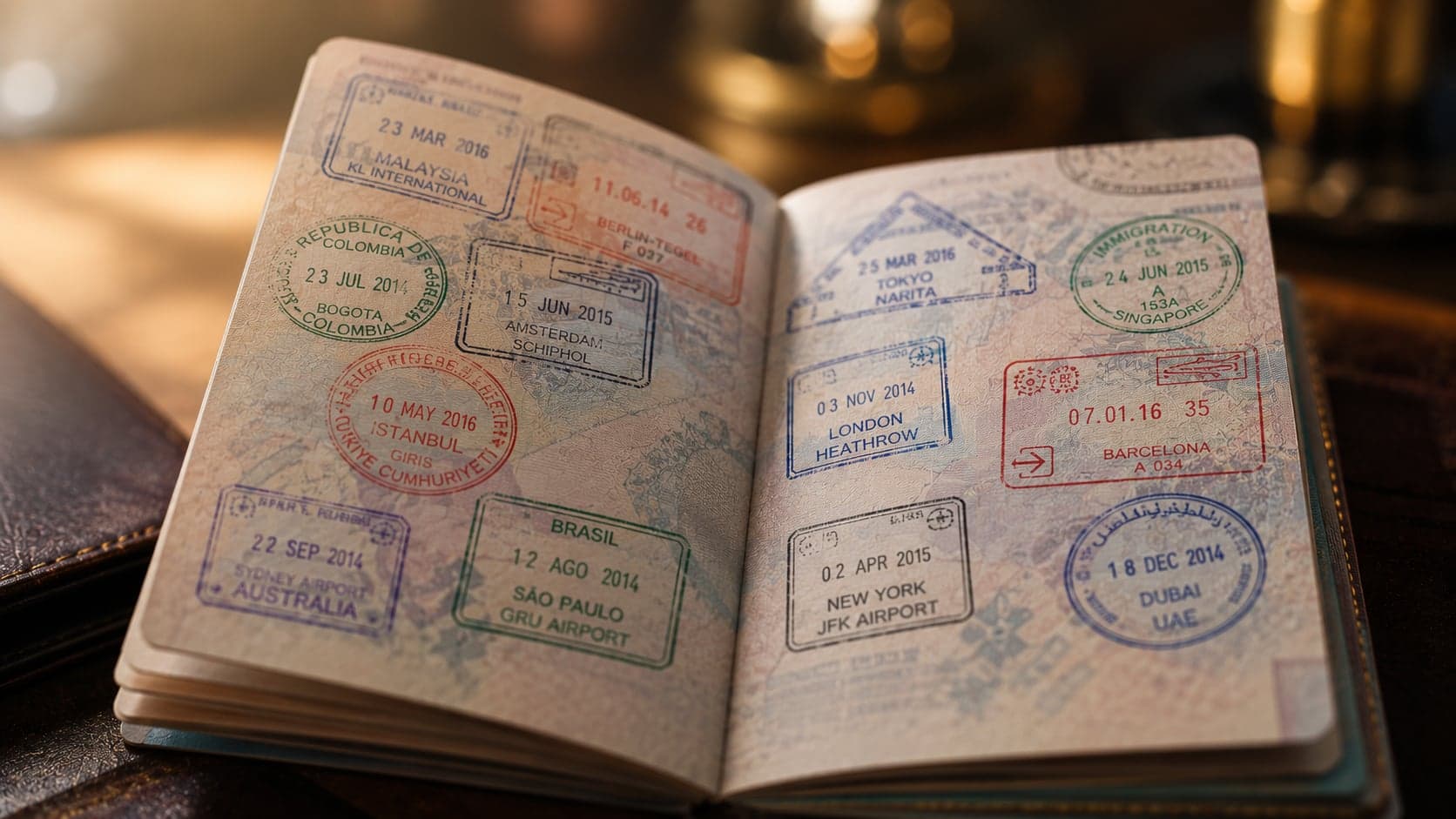
Not long ago, a well-travelled passport told a story. Flip through the pages and you could trace someone's life — the Schengen stamps from a summer in Europe, the Saudi entry stamps from Umrah, the UK entry stamps going back years, the Thai stamps from winter trips, the Malaysian stamps from business visits. Every border crossing left a mark.
That era is ending.
eGates, eVisas, and biometric border systems are rolling out across the world's busiest travel corridors simultaneously. The result is a passport that looks increasingly blank — even for someone who crosses borders every month. And that creates a problem that most travellers haven't thought about yet.
What's already changed
The shift has been happening gradually for years, but it's accelerating.
Saudi Arabia moved to eVisa in 2019. No sticker, no stamp in most cases — your visa exists as a digital record linked to your passport number. Millions of Umrah and tourism visits happen every year with minimal paper evidence.
Thailand has expanded its eVisa system significantly and is experimenting with fully digital arrivals. Malaysia replaced its paper landing card with the MDAC digital arrival system and has been expanding eVisa categories for years.
Australia has had the ETA since 1996 — an electronic visa that leaves no trace in your passport. Most travellers forget they even applied for it.
The UK launched its ETA for many nationalities, moving away from visa stickers. India has processed millions of e-Visas since 2014 with no physical evidence beyond a printout. Kenya, Rwanda, Bahrain, Oman, Qatar — all eVisa only.
The UAE uses biometric entry with inconsistent stamping. Singapore replaced its paper arrival card with the SGAC digital system. The US i94 record has been digital for years, with CBP One replacing paper processes.
The list grows every year. What used to be the exception is rapidly becoming the rule.
The problem this creates
Your passport used to be your travel record. It wasn't perfect — exit stamps were always inconsistent, Saudi stamps appeared on whatever page the officer opened to, Hijri dates didn't match your flight booking — but it was something. A physical document you could hold, photograph, and present.
Now your passport is increasingly just an ID document. The actual record of where you've been lives in government databases across a dozen countries, none of which talk to you directly and most of which won't share their data with each other in any form you can access.
When you apply for a visa and the form asks for your travel history for the last ten years, the answer "it's all in various government systems" is not acceptable. The consulate wants dates. Countries. Entry and exit. In order. From you.
And you have nothing to show them except your own memory and whatever records you kept yourself.
eGates make it worse
Electronic gates at major airports — common now in the UK, EU, US, Australia, and spreading — process you through biometric verification without a stamp. You scan your passport, look at a camera, the gate opens. No officer, no stamp, no paper record in your hands.
This is faster and more secure from a border control perspective. But from your perspective as a traveller, it means an entire trip can leave zero physical evidence. You flew to London, cleared the eGate, spent three weeks, came home through another eGate — and your passport has nothing in it.
Three years later a visa application asks when you last visited the UK and for how long. You know it was 2022 or maybe 2023. You think it was about three weeks. You're not really sure.
Who this hits hardest
Frequent travellers feel this most acutely — business travellers crossing multiple borders regularly, Pakistani and South Asian travellers visiting family across several countries, Muslim travellers making regular Umrah visits, expats managing their days across multiple jurisdictions.
But it also hits anyone applying for a significant visa. US visa applications ask for travel history going back years. UK visa applications want to see consistent, verifiable travel patterns. Schengen national visas scrutinise your history carefully. The less physical evidence you have, the more you're relying on your own records — and the more a gap or inconsistency raises questions.
The only reliable answer
In a world where governments collect your border data but won't give it back to you, your personal travel log is the only record you actually own and control.
This is not a new idea. Frequent travellers have kept travel history trackers, diaries, and spreadsheets for years. What's changed is that the stakes are higher — because the alternative (relying on passport stamps) is no longer reliable.
PassportTrail exists precisely for this moment. Log your trips as you travel — entry date, exit date, country, purpose. Build a record that's yours, that you control, that you can export in a format visa officers understand. As stamps disappear and eGates multiply, your PassportTrail record becomes the only complete travel history you have.
The world is going digital at the border. Your travel record needs to go with it.