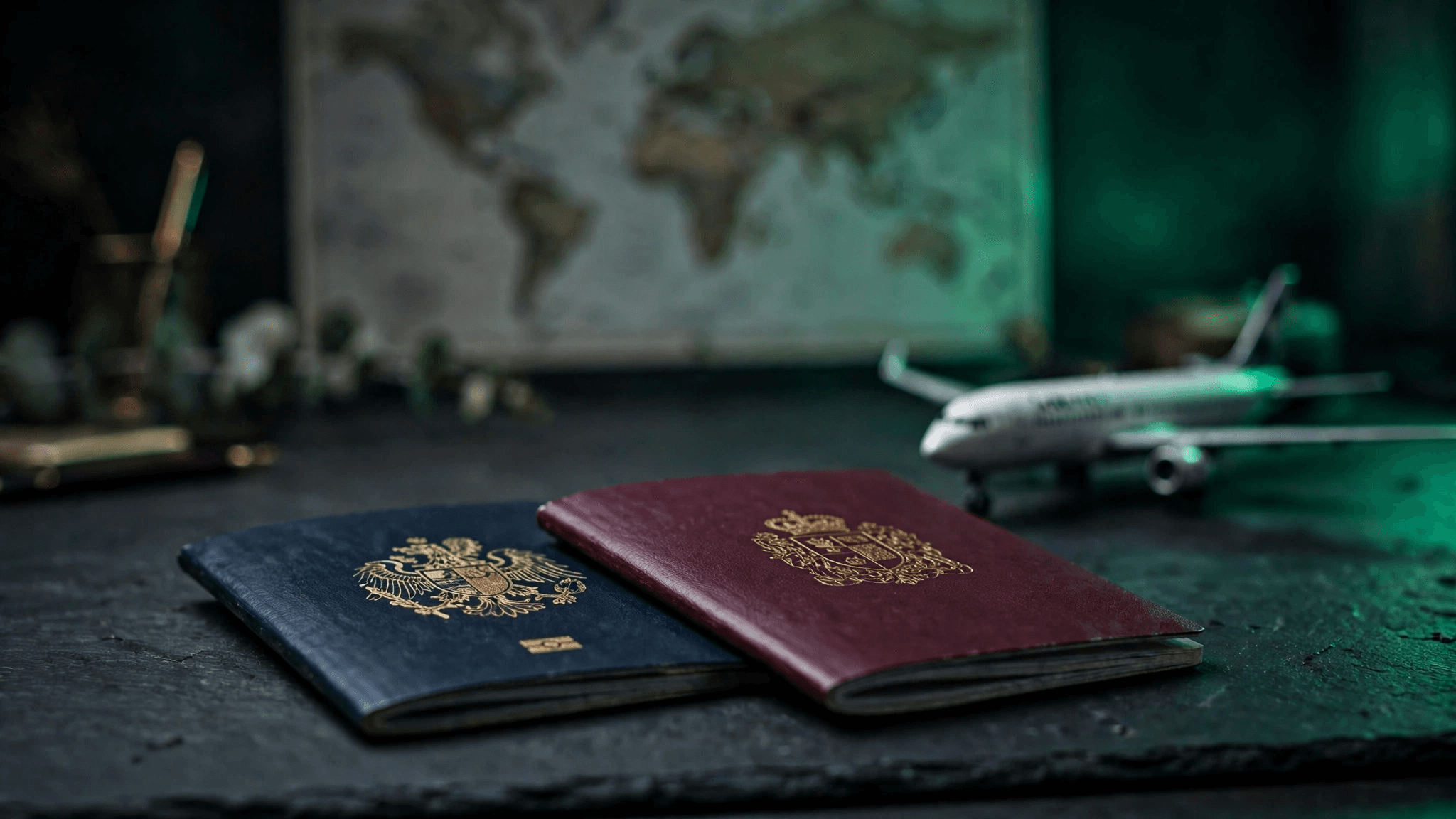
Ahmed has two passports. He was born in Karachi, naturalised in London, and now lives between both cities. At check-in he shows one document, at border control another, and when he lands he sometimes isn't sure which one the officer just stamped — back when they still stamped. "I have twice the travel freedom," he jokes, "and twice the paperwork confusion."
He's not alone. Dual nationals, and travellers who hold two valid passports for any reason, face a record-keeping problem most people never think about: your travel history is now split across two documents, and neither one tells the full story.
The golden rule: one passport per journey leg
The single most important habit for dual-passport travellers is consistency within each trip. Use the same passport to enter and exit a given country. Airlines, border systems and visa records all work best when your entry and exit are linked to one document.
This gets tricky in practice. You might check in for your flight with the passport that needs no visa for your destination, then enter that destination on your other passport because it's faster at that border. Every such switch is a fork in your paper trail. When it happens, note it down — date, country, which passport you used where. Your future self, filling in a visa form, will thank you.
Why "which passport did I use?" matters
Visa applications routinely ask for your travel history across all nationalities and all travel documents. Answering "I went to France in March" isn't enough when the follow-up is "on which passport, and can you show the entry record?"
Inconsistent or incomplete answers are one of the quietest reasons applications slow down. It's rarely about suspicion — it's about the officer being unable to reconcile your story with the records in front of them. Clean, per-passport records remove that friction entirely.
There's a second reason: stay limits are often tracked per person, but enforced per document presentation. If you're counting Schengen days, for example, the count follows you, not the passport. Travellers who split trips across two passports and count days separately per document are setting themselves up for an overstay they never saw coming.
A simple system that works
You don't need anything elaborate. For each passport, maintain a chronological list: date of travel, country entered, country exited, purpose. When a trip uses both passports at different points, record which was used where.
The key disciplines:
- Record at the time. Airport memories fade within days. Log the trip while you're still travelling.
- Keep both passports' records in one place. Two documents, one timeline. If your records live in separate places per passport, you'll never see the full picture.
- Note the exceptions. Every time you switch documents mid-journey, write down exactly what happened. These are the details visa officers ask about.
- Keep expired passports. An old passport is the only proof of the trips recorded in it. Store it safely and keep its trip list alongside your current records.
How PassportTrail fits in
PassportTrail lets you register multiple passports — current and previous — under one profile, and log every trip against the right document. Your timeline stays unified even when your travel is split across two booklets, and stay-limit tracking counts your days as one person, not as two half-histories. When an application asks for your complete travel history, you export one clean report instead of piecing together two passports' worth of stamps and memories.
Two passports should mean twice the freedom, not twice the confusion.
Note: entry and document rules vary by country and nationality. Always verify current requirements with official government sources before you travel. PassportTrail provides personal record-keeping tools, not legal or immigration advice.